

### Blog Post:
There’s nothing like stepping out of your van into the crisp morning air of a Utah canyon and putting your titanium camping cookware on the stove for that first cup of coffee. If you live the van life—whether you’re chasing sunsets along the Pacific Coast or cooking up stew after a day in the Colorado mountains—your camp kitchen gear matters. Titanium cookware promises true ultralight strength and super-compact storage. But is it worth the premium cost or the risk of scorching your oatmeal? Let’s unpack how titanium fits into the real routines and challenges of van life cooking.
Key Takeaways
- Titanium camping cookware delivers unbeatable weight savings and compact design for van dwellers and backpackers.
- The main drawbacks are uneven heating and a higher cost compared to aluminum—making choice of meals and cooking style important.
- Smart nesting and quick-clean features help titanium sets earn their spot in small van kitchens, especially if you focus on boiling or simple meals.
Table of Contents
Understanding the Advantages of Titanium Camping Cookware
For van dwellers who need to keep life mobile and clutter free, titanium camping cookware stands out for its ultralight design and durable build. You can cut serious weight from your kit—most titanium pots, like the Toaks 550ml, barely tip the scale at 2.6 ounces. This makes a huge difference whether you’re climbing switchbacks on a backpacking trip or just looking to stay organized in a compact van kitchen.
The real magic is in titanium’s material properties. It’s both incredibly strong and very thin, allowing manufacturers to create pots that nest together tightly without bending or warping. In the latest guides for 2025, titanium is now considered the “gold standard” for ultralight setups. However, it’s important to know this premium comes at a price—these sets are two to three times costlier than their aluminum counterparts (source).

Durability is another win for titanium. It’s almost impossible to dent or warp, even if you tend to drop your pot on the gravel (which I have, many times). Plus, titanium won’t rust or corrode—making it perfect for year-round, all-weather use, or those unexpected salty coastal breezes.
If you’re comparing shopping lists for your van setup, you’ll see that some of the toughest storage and weight problems are solved by a titanium cook set. No more rattling heavy pots or wrestling warped lids in your cabinets. But like everything, there are some tradeoffs—especially when it comes to actual cooking. That’s where the titanium versus aluminum debate heats up.
Pain Points of Titanium vs Aluminum Camping Cookware
Even though the superlight appeal of titanium is hard to beat, every camper and van lifer I’ve met has a titanium horror story. The biggest issue? Uneven heating. Because titanium pots are so thin and conductive, they heat up extremely fast but don’t spread that heat evenly. The result: boiling water for coffee is lightning quick, but trying to simmer soup or sauté onions easily leads to scorched, stuck-on messes. In fact, many long-term testers call titanium “best for boiling water only” (SectionHiker).
Cost is the next hurdle. Entry-level titanium sets routinely cost twice or three times as much as an aluminum kit. For instance, the ultralight Toaks Titanium mug/pot runs $30-50, while a similar-sized anodized aluminum like the Primus Trek stays in the $20-40 range. The sting is real—especially if you’re outfitting a full van kitchen for two or more people.
Even cleaning isn’t always a breeze. Burned-on food can be tricky to scrub out of a titanium pot, since aggressive cleaning pads risk scratching the finish. Aluminum sets (especially anodized versions) generally offer better “real meal” performance, allowing for successful simmering, sauces, and easier cleanup after frying eggs or pancakes (Backpacking Light Forum).
But aluminum isn’t perfect. Many standard aluminum pots are slightly heavier and will dent, warp, or stain more if not anodized. Older aluminum can leave a metallic flavor, or react with acidic foods if the coating wears off. Still, for most van lifers and car campers, anodized aluminum remains the “safe, affordable default.”
So if you’re planning meals with more than just pour-overs and oatmeal, you’ll want to think honestly about your cooking style—and maybe mix and match titanium and aluminum depending on your needs.
The Van Life Cooking Challenge
Cooking in a van is totally different from spreading out at a campground picnic table. Your space is limited—every cabinet, drawer, and under-bench cubby counts. This is where a titanium cook set for backpacking or van life earns its keep.
The best titanium pots feature nesting designs and folding handles, letting you pack multiple sizes or fit your entire stove, utensils, and lighter inside a single pot. For reference, a full titanium mess kit (two pots, lid, and a spork) can weigh as little as 10 ounces—less than a typical water bottle.
If you’re still deciding on your cook set style, make sure you check out my in-depth guide to camp cookware for van life where I compare the best kits for tiny kitchens.
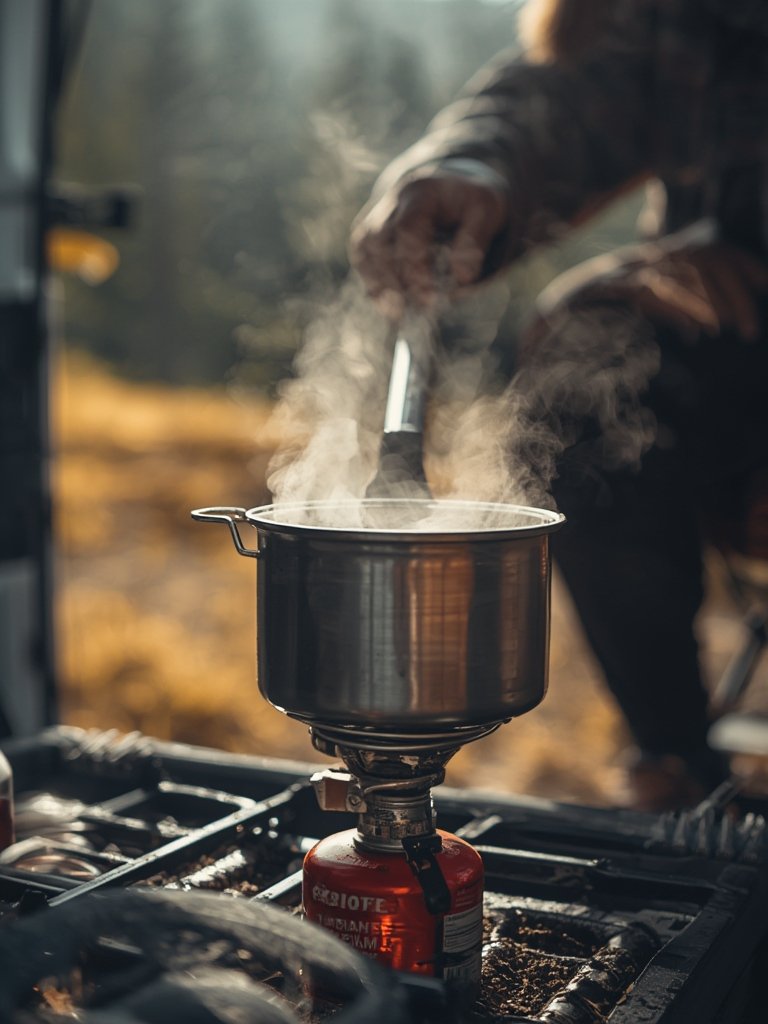
Don’t forget: fuel matters too. Titanium pots are compatible with nearly any small camp stove, from canister burners to alcohol and wood stoves. If you want to get even more efficient, read my canister stove vs alcohol stove breakdown to pick the right fuel for your travel plans.
One more tip from the road—after a quick boil, titanium cools down much faster than other metals. That means you can go directly from cooking to drinking out of the same pot, with minimal wait—perfect for solo van lifers with tight schedules.
Product Comparison: Top Titanium and Aluminum Cookware
Let’s look at how top titanium and aluminum camp cookware stacks up by the numbers. The biggest differences stand out in weight, price, and cooking performance. Here’s a no-nonsense breakdown based on the latest field reports and specs:
| Model | Material | Weight | Price Range (Est.) | BTU Performance Insights |
|---|---|---|---|---|
| Toaks Light Titanium 550ml | Titanium | 2.6 oz (72g) | $30-50 | Fast boil; uneven heat, burn risk |
| MSR Big Titan 2L | Titanium | 6.0 oz (170g) | $100-150 | Rapid transfer; not for simmering |
| Primus Trek 0.6L | Anodized Aluminum | 4.9 oz (139g) | $20-40 | Even heat; fuel-efficient |
| MSR Trail Lite 1.3L | Anodized Aluminum | 7.2 oz (204g) | $30-50 | Simmer/fry superior |
| MSR Trail Lite 2L | Anodized Aluminum | 8.6 oz (244g) | $40-60 | Even dispersion; snow-melt safe |
Clearly, titanium models absolutely crush it on weight. But if you’re a fan of slow-simmered chili or do a lot of winter camping (where you may need to melt snow), the even heat distribution in anodized aluminum is a real advantage. For price, titanium sits firmly in the “ultralight luxury” category, while the best aluminum kits offer 80% of the functionality at half the cost. For more on picking a full set, don’t miss my backpacking cookware set guide.
Notice that most titanium complaints revolve around burning food—not durability. That’s why most long-term campers I know suggest bringing at least one small aluminum pan for anything beyond water, soup, or simple grains. For boiling and fast heating, though, titanium can’t be matched.

Common User Questions
What should I consider when choosing between titanium and aluminum camping cookware?
Decide on your cooking style first. If you want fast boils, less weight, and outstanding durability, go with titanium. If you prefer simmering, “real” cooking with less risk of scorching, or want to keep costs down, anodized aluminum is the safer bet. Don’t forget to size according to your storage and group needs. Check out this helpful MSR cookware materials guide.
Is titanium cookware worth the investment for weekend camping?
It depends. If you’re aiming to go ultralight and want long-term durability with minimal fuss, titanium is great. But for less frequent trips or more complex camp meals, quality aluminum can meet your needs for half the price.
How much do titanium cookware sets typically weigh?
Individual titanium pots like the Toaks 550ml weigh as little as 2.6 oz, and a full two-pot set with lid and utensils can be under 10 oz total. Compare this with similar aluminum kits, which might weigh 30 to 80% more.
Can titanium pots be used on an open flame?
Yes! Titanium pots work well on open flames, alcohol stoves, and wood burners, but the risk of scorching or burning food increases. Stick to boiling or simple one-pot meals when using titanium over high-heat sources. For further info, see this detailed cookware comparison.
What are the best cleaning practices for titanium camping cookware?
Let the pot cool, then soak briefly with warm water. Use a soft pad or cloth for light scrubbing; avoid steel wool or heavy abrasion to protect the material. For stuck-on food, boil a little water inside and scrape gently with a wooden tool. Titanium is non-reactive and cleans up well if not badly burned.
Conclusion and Call to Action
To sum up, titanium camping cookware is a standout solution for anyone living the van life or obsessed with keeping their camp kitchen ultralight, flexible, and rugged. Yes, you’ll pay more upfront and need to be mindful of what you cook, but the benefits for mobile and small-space living are real. If you’re all about weight savings, fast boils, and no-fuss durability, a titanium set could be the best van kitchen investment you’ll make this season.
Ready to upgrade your camp kitchen? Check out the best titanium camping cookware sets on Amazon—from minimalist mugs to complete cook sets, there’s an ultralight option for your adventures. See which model fits your kitchen and start cooking smarter on your next road trip!
—